


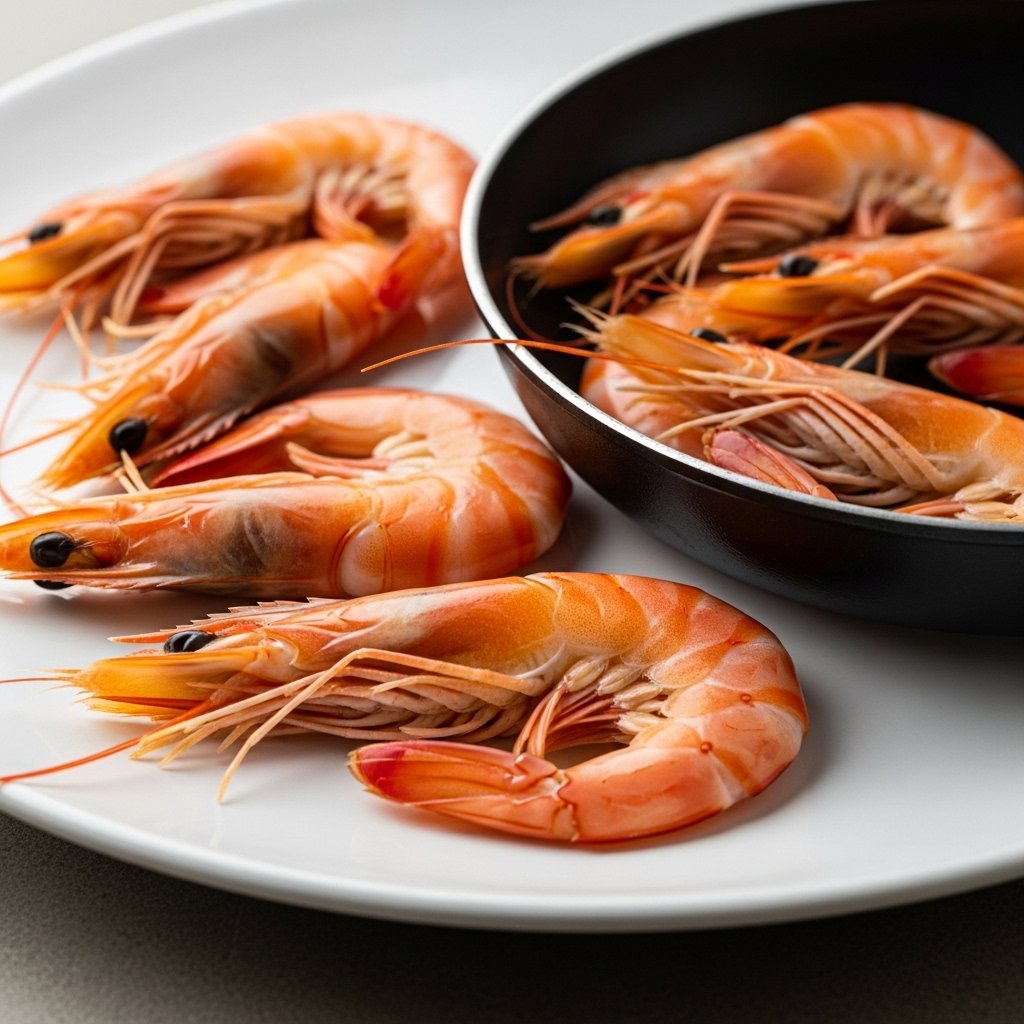
Description
Shrimp (Caridea) swimming crustaceans are a staple in many cuisines globally with the scientific name stemming from the Greek word karis or karidos. There are over 2,000 species with varying sizes. Shrimp are a healthy protein source, high in calcium and vitamin B12 and low in saturated fat. A 3oz serving contains around 84 calories.
| Size Label | What It Means | Typical Description and Use |
|---|---|---|
| 2-1lb (2 per lb) | 2 shrimp per pound | Extremely rare and gigantic; usually served as a showpiece; nearly prawn or lobster tail size. |
| U-4 | Under 4 shrimp per pound | Huge, specialty-size shrimp; ideal for impressive entrees or grilling whole; 1–2 shrimp make a generous serving. |
| U-6 | Under 6 shrimp per pound | Massive, “super colossal;” perfect for gourmet presentations, large appetizers, or grilling. |
| U-8 | Under 8 shrimp per pound | Very large; often called “colossal;” used for dramatic shrimp cocktails, stuffing, or as a premium centerpiece. |
| U-12 | Under 12 shrimp per pound | “Super Colossal;” firm texture, excellent for shrimp cocktail or barbecue, generally 2–3 per serving. |
| U 11-15-16-20 | 11–15, 16–20 shrimp per pound | “Colossal” (11–15) and “Extra Jumbo” (16–20); popular dinner size for grilling, sautéing, or pasta; meaty and versatile. |
| RAW | COOKED | Description |
|---|---|---|
| Shell on, head on | 11–75 | Whole shrimp with shell and head attached; often used for presentation or traditional dishes. |
| Shell on, head off | 16–20 | Shrimp with shell but head removed; common for grilling, sautéing, or boiling. |
| P.D. tail on | 21–25 | “Peeled & deveined,” tail left on for appearance; easy to eat and great for shrimp cocktails. |
| P.D. tail off | 26–30 | “Peeled & deveined,” no tail; ideal for pasta, salads, and dishes where picking up the whole shrimp is not needed. |
| 31–36 | Smaller peeled shrimp, convenient for stir-fries, curries, or recipes calling for bite-sized seafood. |
Shrimp Brief Guide
What Makes a Great Shrimp?
For top taste and texture, wild caught Gulf Coast shrimp are prized for their sweet flavor and tender texture, while Argentinian shrimp are valued for their sweetness and firmer bite1.
Most Common Shrimp Types
You’ll often find these shrimp in markets or on menus1:
-
Rock shrimp
-
Pink shrimp
-
Tiger shrimp
-
Chinese white shrimp
-
Brown shrimp
-
White shrimp
-
Spot shrimp
-
Aesop shrimp
-
Atlantic Northshore
-
Banana prawn
-
Blue shrimp
Understanding Shrimp Sizes
Shrimp are often labeled by how many pieces make up a pound, with terms like “U-8” meaning “under 8 shrimp per pound”—the smaller the number, the larger the shrimp. Here are sample commercial sizes and what the names usually mean1:
| Size Name | Typical Form | Size Description | Recommended Use |
|---|---|---|---|
| U-8 White Shell On | Shell on, head off | Fewer than 8 shrimp per pound; very large | Showpiece grilling, impressive entrées |
| U-10 White Shell On | Shell on, head off | Fewer than 10 shrimp per pound; “super colossal” | Ideal for BBQ, stuffing, or luxury dishes |
| 13-15 White Shell On | Shell on, head off | 13–15 shrimp per pound; “colossal” | Perfect for shrimp cocktail, grilling |
| 16-20 White Shell On | Shell on, head off | 16–20 shrimp per pound; “extra jumbo” | Versatile for grilling, pasta, or sautéing |
| 8-12 P&D Tail On | Peeled, deveined, tail | 8–12 per pound; very big | Eye-catching appetizers, grilling, pasta |
| 13-15 P&D Tail On | Peeled, deveined, tail | 13–15 per pound | Premium dinner shrimp, salads |
| 13-15 Argentina Reds | Peeled, deveined, tail | Sweet, firm Argentinian shrimp | Grilling, broiling, main dishes |
| 16-20 P&D Tail On | Peeled, deveined, tail | 16–20 per pound | Grill, sauté, or serve in pasta |
| 21-25 P&D Tail On | Peeled, deveined, tail | 21–25 per pound | Shrimp cocktail, pasta, salads |
| 26-30 P&D Tail On | Peeled, deveined, tail | 26–30 per pound | Stir-fry, curries, casseroles |
| 31-40 P&D Tail On | Peeled, deveined, tail | 31–40 per pound | Quick-cooking dishes, rice, or wraps |
| 31-40 EZ Peel | Partially peeled | 31–40 per pound; easy to peel after cooking | Easy prep for quick sautés, boils |
| 16-20 P&D Tail Off | Peeled, deveined | 16–20 per pound, no tail | Pasta dishes, casseroles, or stir-fries |
| 21-25 P&D Tail Off | Peeled, deveined | 21–25 per pound, no tail | Everyday cooking, fried rice, salads |
| 26-30 P&D Tail Off | Peeled, deveined | 26–30 per pound, no tail | Bite-sized appetizers, mixed dishes |
| 31-40 P&D Tail Off | Peeled, deveined | 31–40 per pound, no tail | Seafood omelets, soups, tacos |
| 41-50 P&D Tail Off | Peeled, deveined | 41–50 per pound, no tail | Pasta, salads, sushi rolls |
| 51-60 P&D Tail Off | Peeled, deveined | 51–60 per pound, no tail | Mixed seafood dishes, fillings, small plates |
P&D = Peeled and Deveined.
Forms & Packaging
Common ways shrimp are sold1:
-
Shell on, head on (traditional, for flavor-rich recipes)
-
Shell on, head off (common in Western cuisines)
-
Peeled & deveined, tail on (easy to eat, still looks attractive)
-
Peeled & deveined, tail off (most convenient for stir-fries/pasta)
-
Frozen in blocks, 2lb bags, or fresh by pound or kilo
-
Sometimes offered live in water (salt or fresh)
Cooking and Serving Tips
-
Larger shrimp are best grilled, broiled, or stuffed to show off their size and sweetness.
-
Medium and smaller shrimp are ideal for stir-fries, curries, salads, or mixed in pastas.
-
Tail on shrimp offer a better appearance for cocktails and party platters, while tail off are more convenient for mixed or bite-sized recipes.
Quick Decision Guide
-
Want flavor and texture? Choose wild Gulf or Argentinian shrimp.
-
Prefer convenience? Go for peeled & deveined, tail off.
-
Grilling or entertaining? Select U-12 or U-10 sizes for wow-factor.




Reviews
There are no reviews yet.